
Fifty Reps a Day
Your kid's grit isn't built at the recital — it's built at dinner.
- Kids who practice pushing through boredom and frustration daily become the ones who don't quit piano, don't crumble at exams, and don't need you to fix everything.
- The move: build reps into the day you already have — morning routines, homework, vegetables, bedtime — and hold the line without rescuing or distracting.
How tiny moments of discomfort build kids who don't quit
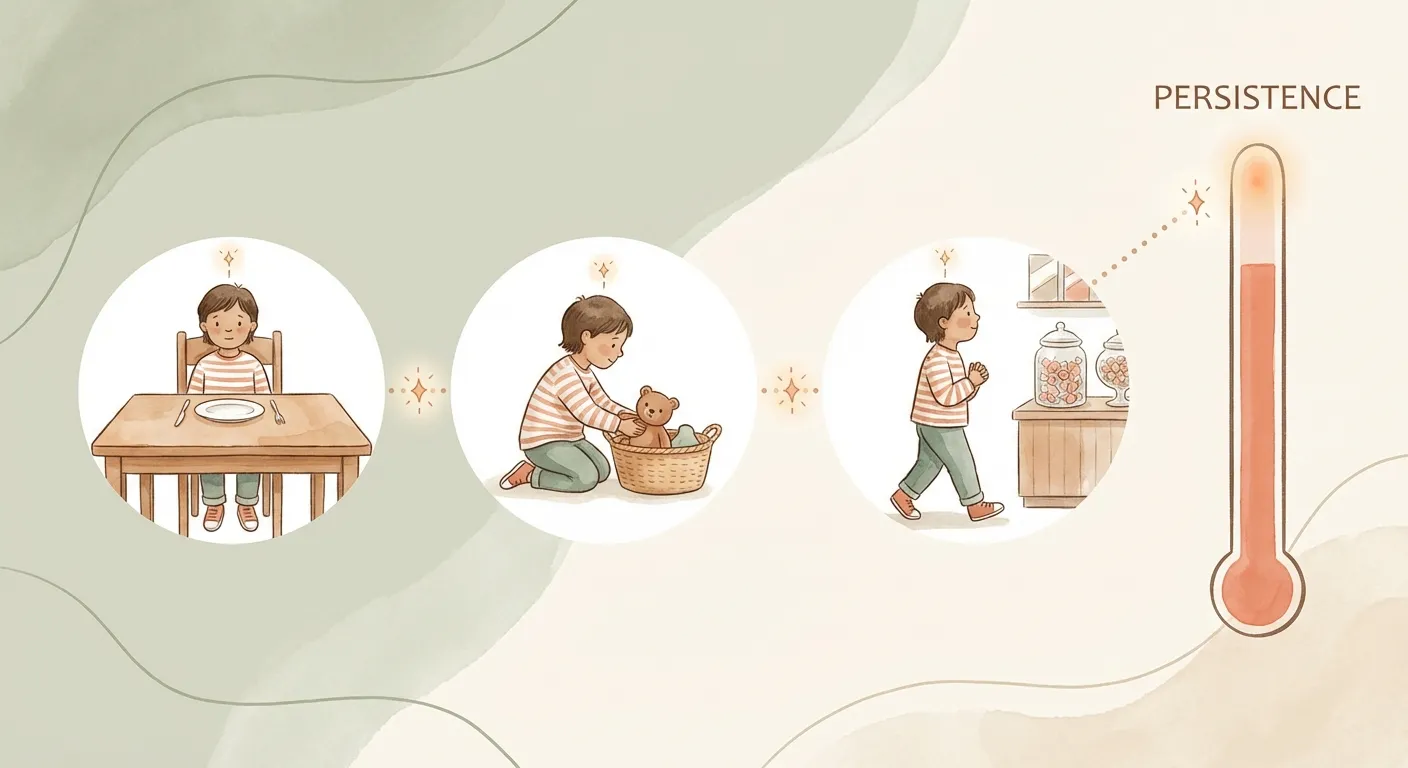
Persistence is built one small step at a time
Your kid's piano recital isn't where grit gets built. Neither is the championship game or the big exam. Those are the tests. The training happens in moments so small you barely notice them.
Waiting for dinner instead of grabbing a snack. Walking past the candy aisle without a meltdown. Finishing the last two math problems when their brain is screaming "done." These are reps. And just like bicep curls, the muscle only grows under load.
Every rep of discomfort your child completes on their own deposits confidence in their "I can handle hard things" account.
The research backs this up in a big way. Longitudinal studies tracking children from preschool into adulthood found that early self-control predicted better academic outcomes, healthier relationships, and fewer behavioral problems — even after controlling for intelligence and family income. And the best part: self-control isn't fixed at birth. It's a skill that grows with practice.
So the question isn't "how do I make my kid tougher?" It's "how many reps did they get today?"
Your Daily Rep Sheet
You don't need special equipment or a dedicated "grit hour." The reps are already baked into your day. You just have to stop removing them.
Morning
They want to wear sandals in January. You hold the line.
"I know you love those. Sneakers today. You'll survive — and your toes will thank you."
After School
Homework before screens. They negotiate. You don't.
"Homework first, then you're free. That's the deal every day — no new information here."
Dinner
They push away the vegetables. You wait.
"Two bites. You don't have to love it. You just have to do it."
Bedtime
One more episode. One more story. One more glass of water.
"I love hanging out with you too. But lights out means lights out. See you in the morning."
Each of these is a tiny deposit. None of them feel heroic. All of them compound.
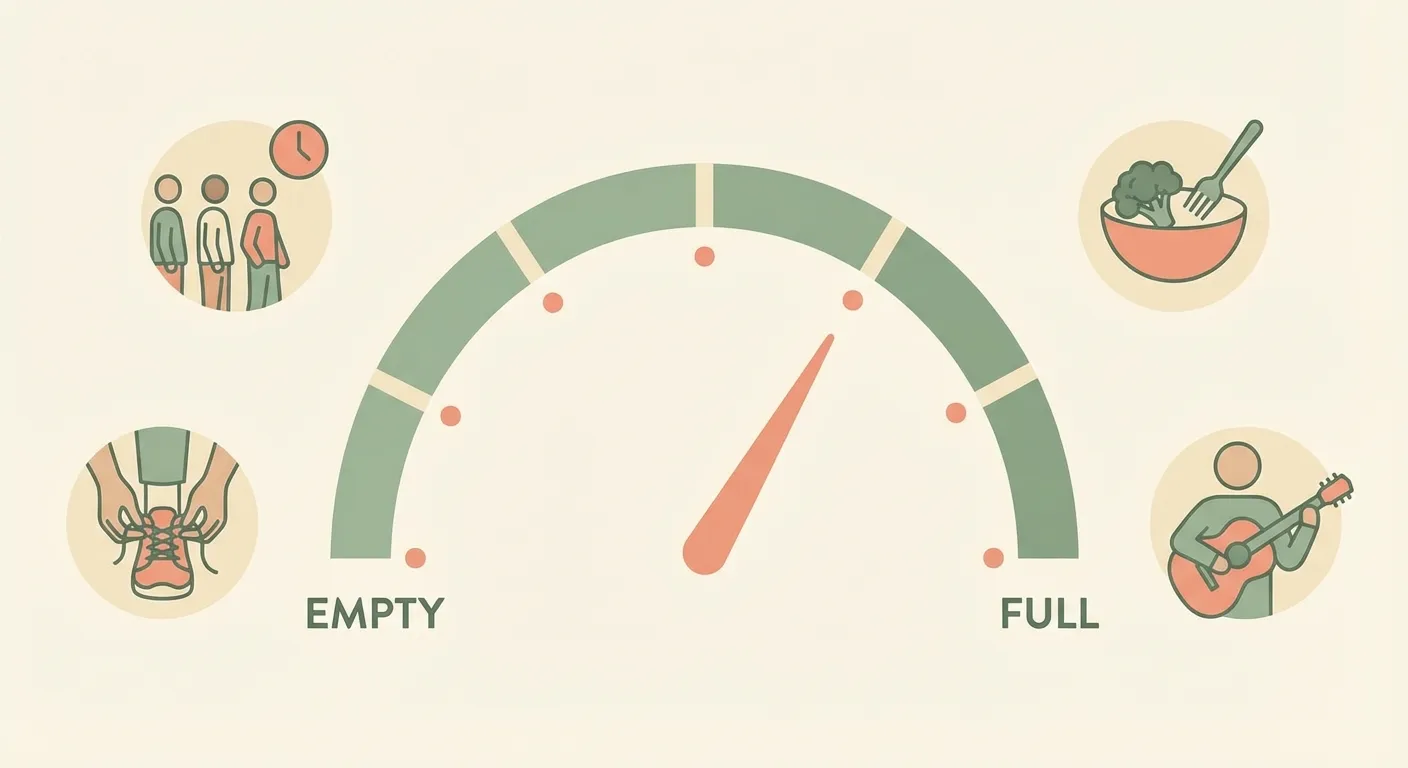
Small daily moments fill the persistence tank
The Two Traps That Drain the Tank
When your kid hits friction, your instinct will reach for one of two escape hatches. Both feel like helping. Both drain reps from the account.
The Rescue Trap
- They stare at the science project. You "help" by doing most of it.
- They get an A. They learn nothing about pushing through confusion.
- Next time: they stare and wait for you again.
The Flip
- Sit nearby. Ask one question: "What's the first tiny piece you could figure out?"
- Then wait. Silence is okay.
- Next time: they stare, then start. That's the rep.
The Distraction Trap
- They whine about piano practice. You suggest ice cream instead.
- The whining stops. The piano stays unplayed.
- Tomorrow's whining will be louder.
The Flip
- Name it: "You're frustrated. That's normal when you're learning something new."
- "Five more minutes, then you're done."
- Tomorrow: still some whining, but shorter. That's the rep.
Give Them Words to Grab
When the urge to quit hits, kids need something short and physical to hold onto. Not a speech. A phrase. Help your child pick one, then use it yourself when you see them struggling — it activates the anchor without a lecture.
| Anchor Phrase | When It Hits | What It Does |
|---|---|---|
| "One more step" | The task feels endless | Shrinks the horizon to the next single action |
| "Not yet" | They want to quit | Reframes quitting as a choice they haven't made yet |
| "I've done hard things before" | They doubt themselves | Connects present struggle to past proof of capability |
| "Almost there" | Final stretch, willpower lowest | Creates a finish line they can see |
Age-Calibrated Reps
The weight you put on the bar changes with age. A three-year-old and a teenager need different loads, different coaching.
Ages 3-6: The Character Power-Up
Young kids persist longer when they pretend to be a strong character. Developmental research found that children in character stayed on task significantly longer than those working as themselves. It works because stepping outside their own frustration gives them distance from the "I don't wanna" feeling.
Try this: "I think this job needs a firefighter. Can you show me how a firefighter would tackle this mess? Firefighters don't quit!"
Ages 7-12: The "Prove It" Challenge
When school-age kids say "I can't," their brain is confusing "this is uncomfortable" with "this is impossible." Break the pattern with a micro-challenge.
Try this: "You say you're done. Give me just two more minutes — set a timer — then we'll compare. I bet you surprise yourself."
Debrief after: "Your brain said stop at minute one. You made it to minute two. What does that tell you about next time?"
Ages 13+: The Honest Trade-Off Talk
Teens see through "just try harder" lectures. What lands is when you acknowledge the appeal of the easy path and lay out the math of what it costs. Credibility comes from honesty, not prohibition.
Try this: "I get why scrolling feels better than studying right now — your brain literally wants the dopamine hit. But an hour of comfort tonight buys you a week of stress when the exam shows up. Your call, but make it with your eyes open."
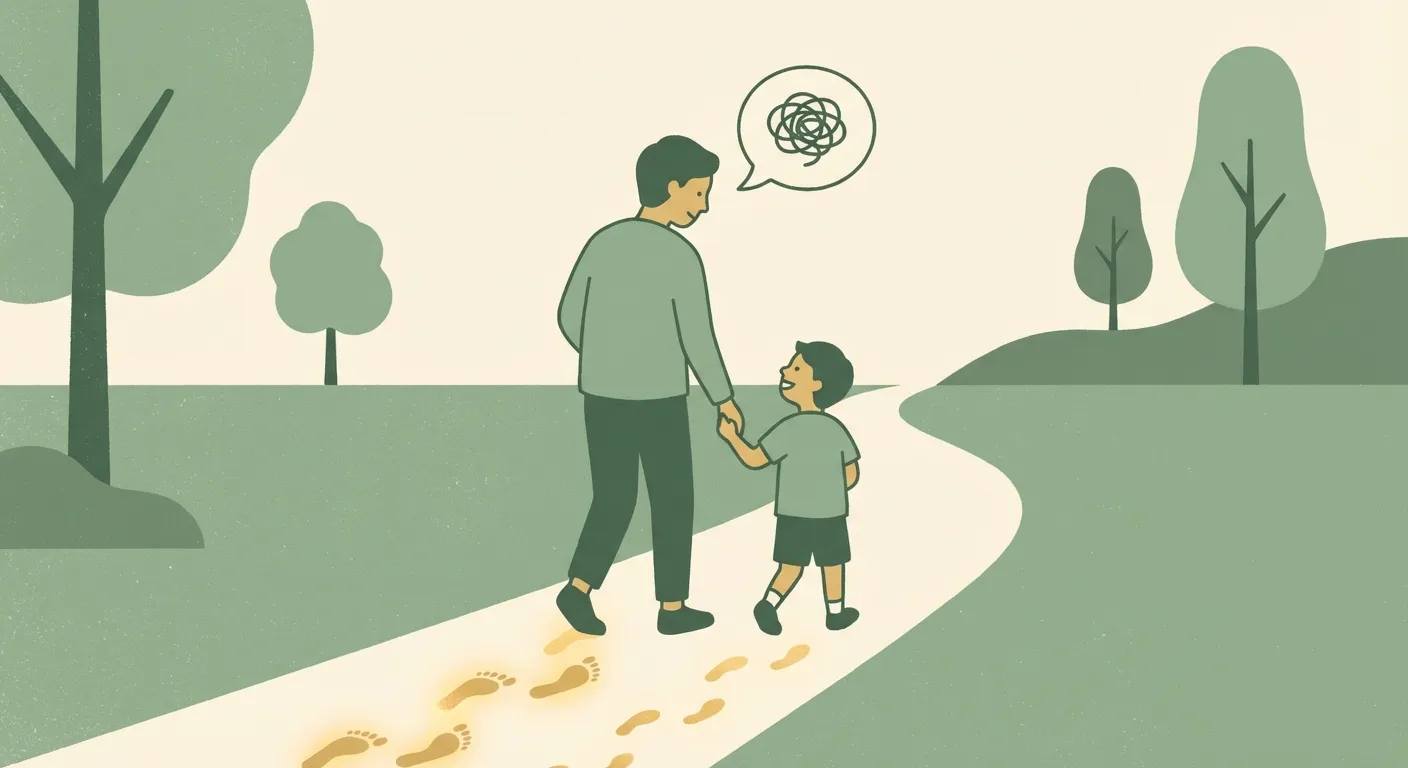
Model the push-through out loud — kids absorb what they see
Keep the Streak Alive (Without Obsessing Over the Streak)
Persistence isn't all-or-nothing. It's a batting average. Your kid pushed through on Tuesday but caved on Wednesday? Highlight Tuesday. The average improves over time.
Build reps into daily life. Don't wait for big moments. Everyday friction — waiting for dinner, finishing a chore before screen time, walking past the candy aisle — is where the muscle actually grows.
Narrate your own push-throughs. "I really don't feel like going for a run, but I know I'll feel better after." Kids absorb what they see modeled far more than what they're told.
Watch for energy crashes. Most shortcut-taking happens when everyone is exhausted. If you're out of gas by 7 PM every night, the fix isn't more willpower — it's restructuring the day so you have fuel when it matters.
Celebrate the reps, not just the results. "You stuck with it even when it was boring" lands harder than "great job on the A." One builds identity. The other builds dependence on grades.
Fifty reps a day. Most of them invisible. All of them compounding. That's how you raise a kid who doesn't quit when it counts.