
The 2-Minute Game That Gives Kids a Photographic Memory
A 120-year-old technique turns any walk into visual memory training.
- Kids who do this recall scenes in photographic detail, build sustained attention naturally, and carry a mental gallery that refreshes them as adults.
- The move: stare, close eyes, find the blurry spots, look again — repeat until the mental image is perfect.
Charlotte Mason's picture-painting technique turns any walk into a brain-training adventure.
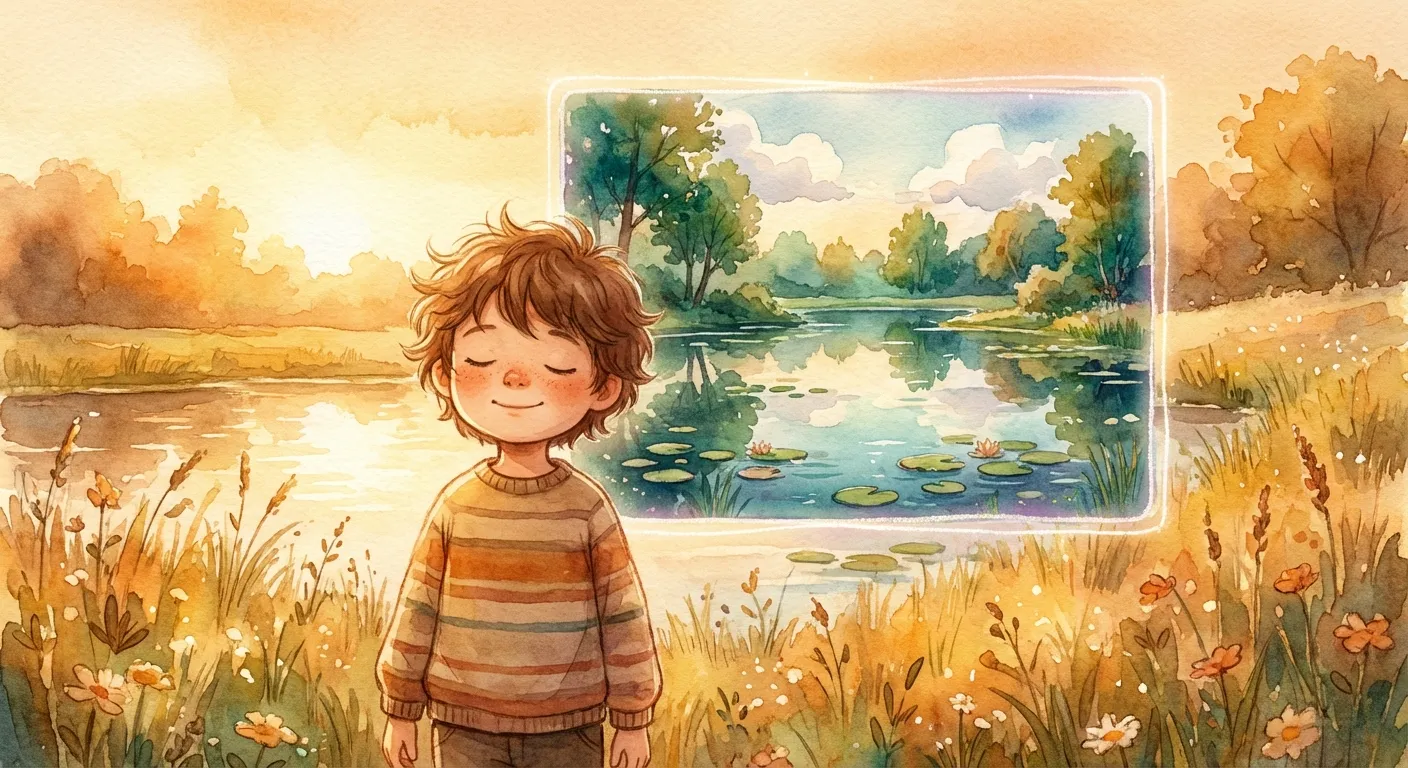
Next time you're outside with your kid, try this: pick something beautiful -- a tree, a pond, the way clouds are sitting above a roofline -- and say, "Okay, stare at it. Get every detail. Now close your eyes and tell me what you see."
That's it. That's the whole game. And it's been building remarkable visual memories in children since 1906.
Charlotte Mason called it "picture-painting," and she treated it like a superpower. Not a nice-to-have. Not an artsy add-on. She argued that most adults walk around with blurry, half-remembered childhoods because nobody ever taught them how to actually see.
What the Game Looks Like
Five steps. No supplies. Works anywhere there's something worth looking at.
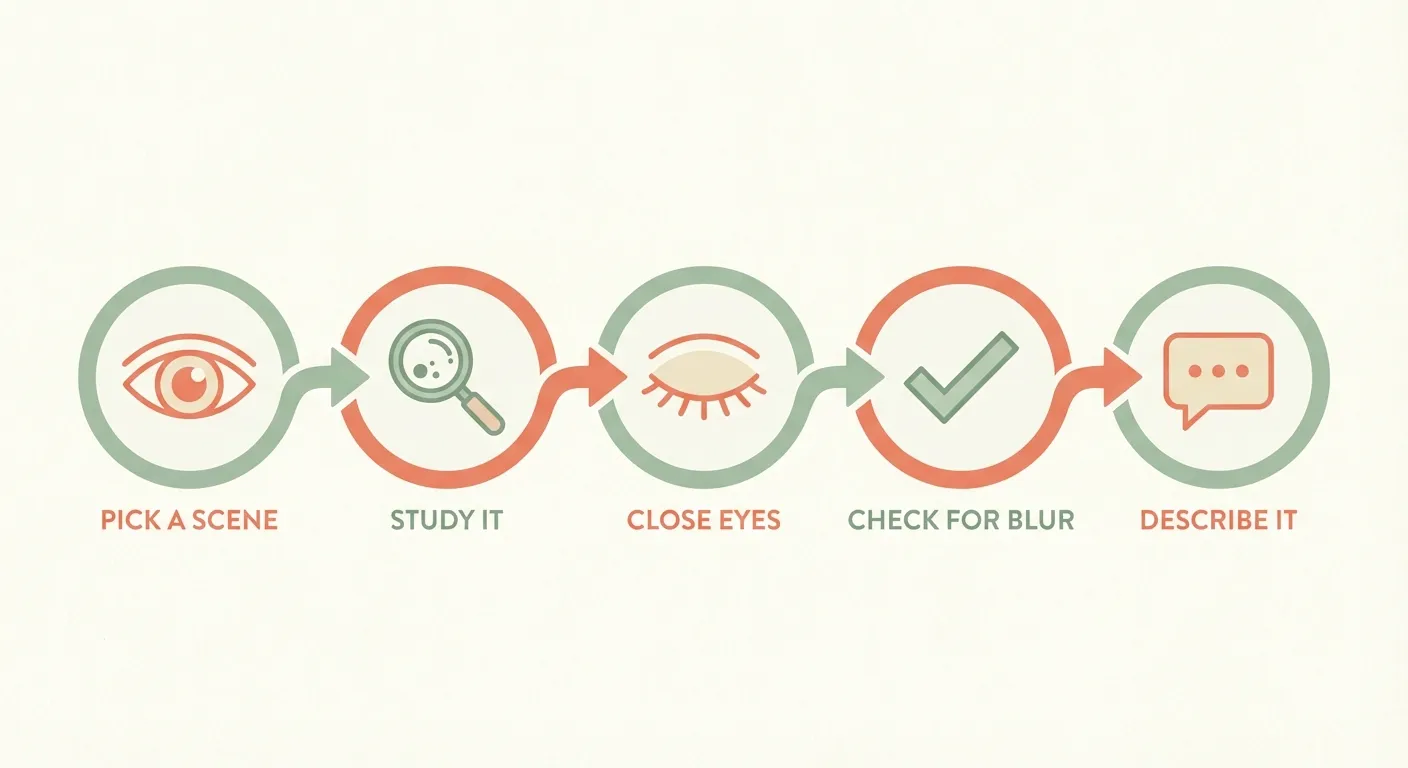
The magic is in step 4 -- the blur check. Your kid closes their eyes, tries to recall the image, and if any part is fuzzy? They open their eyes, look again, close them, and try once more. It's basically a focus rep for the brain, except it feels like a challenge, not homework.
That back-and-forth -- look, close, check, look again -- is where the training happens. Each cycle sharpens the mental image like adjusting a camera lens.
Why This Builds Something Permanent
Here's what Mason noticed, and it holds up: most people can't clearly picture scenes from their childhood. Not because the scenes weren't beautiful, but because they were never fully seen. The eyes scanned. The brain didn't store.
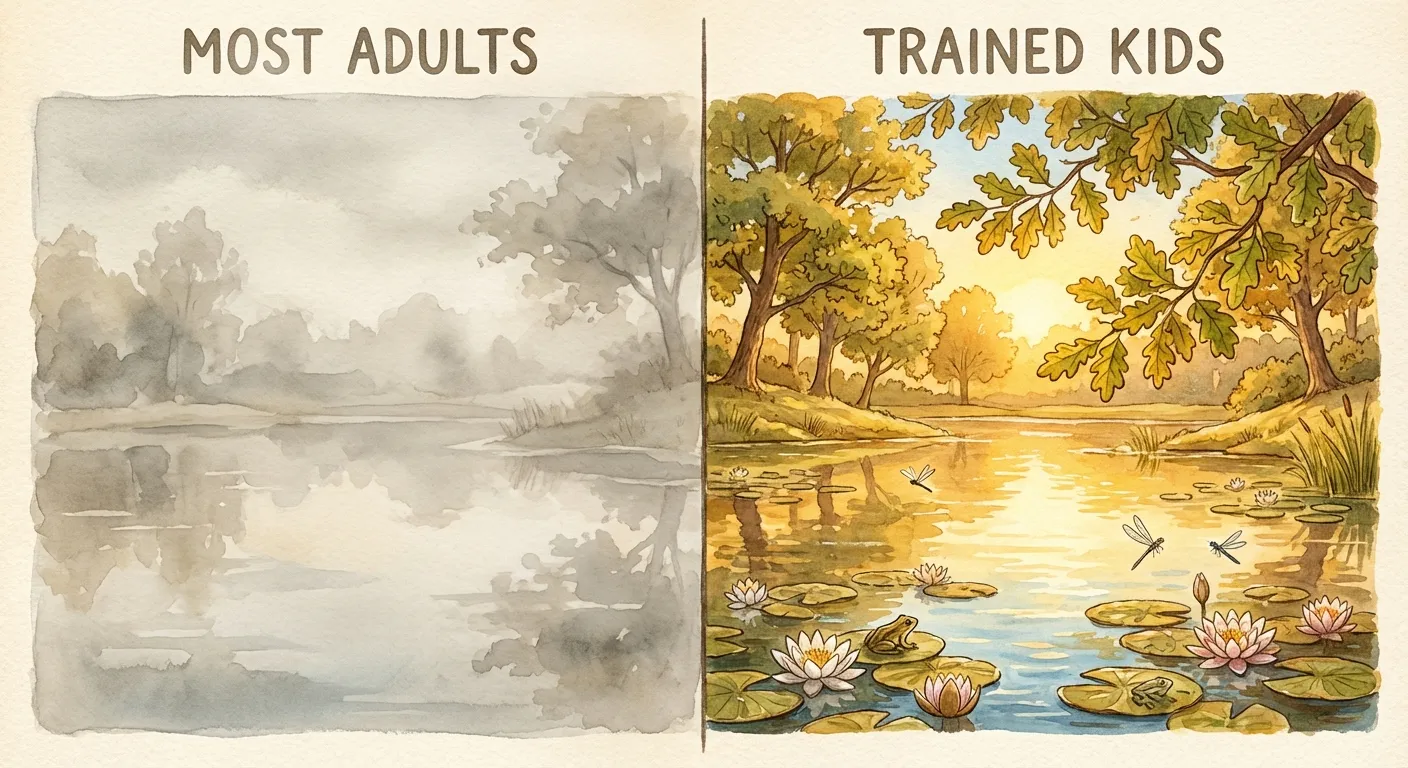
Most adults carry faded impressions. Trained kids carry vivid photographs.
Kids who practice picture-painting build a personal gallery of crystal-clear images they can pull up for decades. Mason described adults who'd trained this way returning to mental snapshots from childhood for "solace and refreshment" in difficult moments.
It's not just nice. It's a lifelong internal resource.
How to Set Them Up for Success
| Do This | Not This |
|---|---|
| Point out something specific: "Look at how the branches dip into the water" | Say "look around" and hope they figure it out |
| Model it yourself -- close your eyes and describe your own mental picture | Stand there watching them with a clipboard vibe |
| Add a fun detail: "It looks like there's a whole forest under the water!" | Keep it dry and instructional |
| Start with small, close scenes (a flower, a rock formation) | Start with sweeping panoramas they can't possibly capture |
| Do it once or twice per outing, tops | Turn every walk into a drilling session |
Mason specifically said kids naturally see "near and minute" details well, but need help with wider scenes. So start small. A patch of wildflowers. One interesting tree. Build up to landscapes as the skill grows.
Two Rules That Protect the Magic
- Don't overdo it. Mason was explicit: this involves real mental strain and should only happen "now and then." It's a treat, not a daily drill. The moment it feels like an assignment, you've lost.
- Never show off your kid's descriptions. Don't repeat them to grandma on the phone. Don't tell visitors how amazing it was. Mason warned that turning it into a performance "spoils the simplicity" of the experience. Let it stay between you and them.
That second one is hard. When your six-year-old closes their eyes and delivers a detailed, vivid description of a pond scene complete with reflections and lily pad positions, everything in you will want to brag. Don't. The privacy is what makes it safe to be imaginative.
Try It This Weekend
Your next walk. Pick one beautiful thing. Have them stare, close, check, describe. That's the whole game. Two minutes, no setup, no materials.
And twenty years from now, they'll still be able to close their eyes and see it.